

Thursday, 23rd April, 2026
Second class candidates
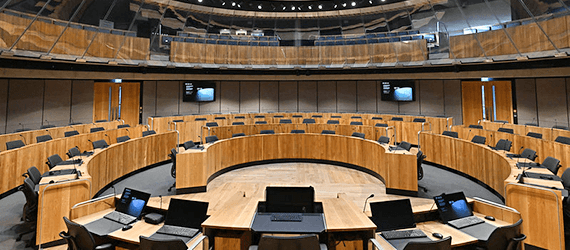
One of the legacies, if we can call it that, of Wales’ outgoing parliament is its array of institutional reforms.
By far the biggest was to increase our devolved legislature’s size, which from next month’s election jumps from sixty members to ninety-six.
I’ve covered this hot potato previously.
The incoming 60% membership size increase enjoys little popular support, but we’re saddled with it because Cardiff Bay knows best.
This multi-million-pound Senedd expansion understandably gets most attention, but its new voting method makes for an even rawer deal.
Wales is now divided into sixteen super-constituencies. This is controversial for a few reasons, including that they’ve been given Welsh-only names, some of which aren’t logical.
Here in Pembrokeshire we’ll be part of the new ‘Ceredigion Penfro’ seat – combined with our neighbouring county which is slightly larger by area but much smaller by population.
But Penfro is the name of the town of Pembroke, not the county of Pembrokeshire, which, even though it provides nearly two thirds of this new seat’s electorate, is given second billing.
The building blocks for these seats were the existing UK parliamentary constituencies, and our new local Senedd seat is the only one to combine two unitary authority areas entirely.
With six seats up for election in each super-constituency, voters will be given one cross to place on their ballot paper – no multiple votes or ranking to be done.
Whilst independent candidates can stand, the new electoral arrangements are made with parties in mind, not candidates.
Parties can field slates of candidates, but voters who wish to elect a particular one of them can only vote for their party, not a named individual.
Arguments about the anti-democratic nature of the party-list method have been much discussed, particularly how it gives party supremoes the power to set candidates’ order on the list and hence their prospects of success.
This party-list system operating in enormous constituencies is patently to the detriment of non-party candidates, who quite obviously have a history of fighting individual campaigns on local platforms.
But the marginalisation of independents is much worse than that, due to an aspect which isn’t much talked about:
There is absolutely no provision – under any circumstance – for the holding of a by-election to fill any vacant Senedd seat.
The new system is designed such that, in the case of a vacancy, the ‘next’ member on the list of a vacant seat’s party will be in line to become the replacement member – but there is no way to fill a vacancy left by an independent member.
It isn’t an unforeseen consequence. But more importantly it exposes the voters of successful independent candidates to a bewildering democracic deficit.
The effect of the reforms is stark: should an independent win a seat in May’s Senedd election, and then dies in office or otherwise vacates the seat, that member cannot be replaced. Their constituents will instead be served by five representatives, not six, for the remainder of the parliamentary term.
There being no facility to replace a non-party-list electee, this situation would effectively see the Senedd undergoing a corresponding reduction in size from 96 to 95 members until 2031.
To call this situation a loophole would trivialise it – and the argument that it would be too costly to hold a by-election in a super-constituency is surely a strong argument against super-constituencies, which have many other, strong, and coherent black marks against them as it is.
The chances of an independent candidate winning one of the 96 seats a fortnight today may be slim by design – but it could happen.
Of course the chance that a successfully-elected independent dies in office are slimmer still, but that’s not the point. This was a foreseeable defect.
Independent candidates are a second class in the eyes of Cardiff Bay’s party elites – by which I would include almost every representative who’s just left that body, many of whom won’t be returned on May 7th.
A system in which it’s possible for voters in any constituency to sit years without their rightful allocation of representatives, with no way to correct it, doesn’t sound very democratic.
It has all the hallmarks of poor legislating – and I have no confidence that, had these plans been brought in by a chamber containing thirty-six more brains, they would have done any better.
 Check out and 'like' my Facebook page ↴
Recent posts…


You could be the first to comment.